
What are the different types of car insurance? Navigating the world of car insurance can feel like driving through a maze, with countless options and terms that can leave you feeling lost. But understanding the basics is essential to protecting yourself financially in case of an accident.
From liability to collision, there are various types of coverage designed to address different needs and situations. This guide will break down the common types of car insurance, explaining their benefits, limitations, and real-world scenarios.
Knowing what kind of coverage you need can make a significant difference in your peace of mind and your wallet. By understanding the different types of car insurance, you can make informed decisions to ensure you have the right protection for your specific circumstances.
Understanding the Basics of Car Insurance
Car insurance is a vital financial safety net that protects you and your vehicle in case of accidents, theft, or other unforeseen events. It provides financial coverage to help you pay for repairs, medical expenses, and other costs associated with these incidents.
How Car Insurance Works
Car insurance works by transferring the risk of financial loss from you to the insurance company. You pay a premium, which is a regular payment, to the insurance company in exchange for their promise to cover certain expenses if you experience a covered event.
When you file a claim, the insurance company assesses the situation and pays for the covered expenses up to the policy’s limits.
Key Terminology
Understanding key terminology is crucial to navigating the world of car insurance. Here are some important terms to know:
- Premium:The regular payment you make to the insurance company for coverage.
- Deductible:The amount you pay out-of-pocket before your insurance coverage kicks in.
- Coverage Limits:The maximum amount your insurance company will pay for a covered event.
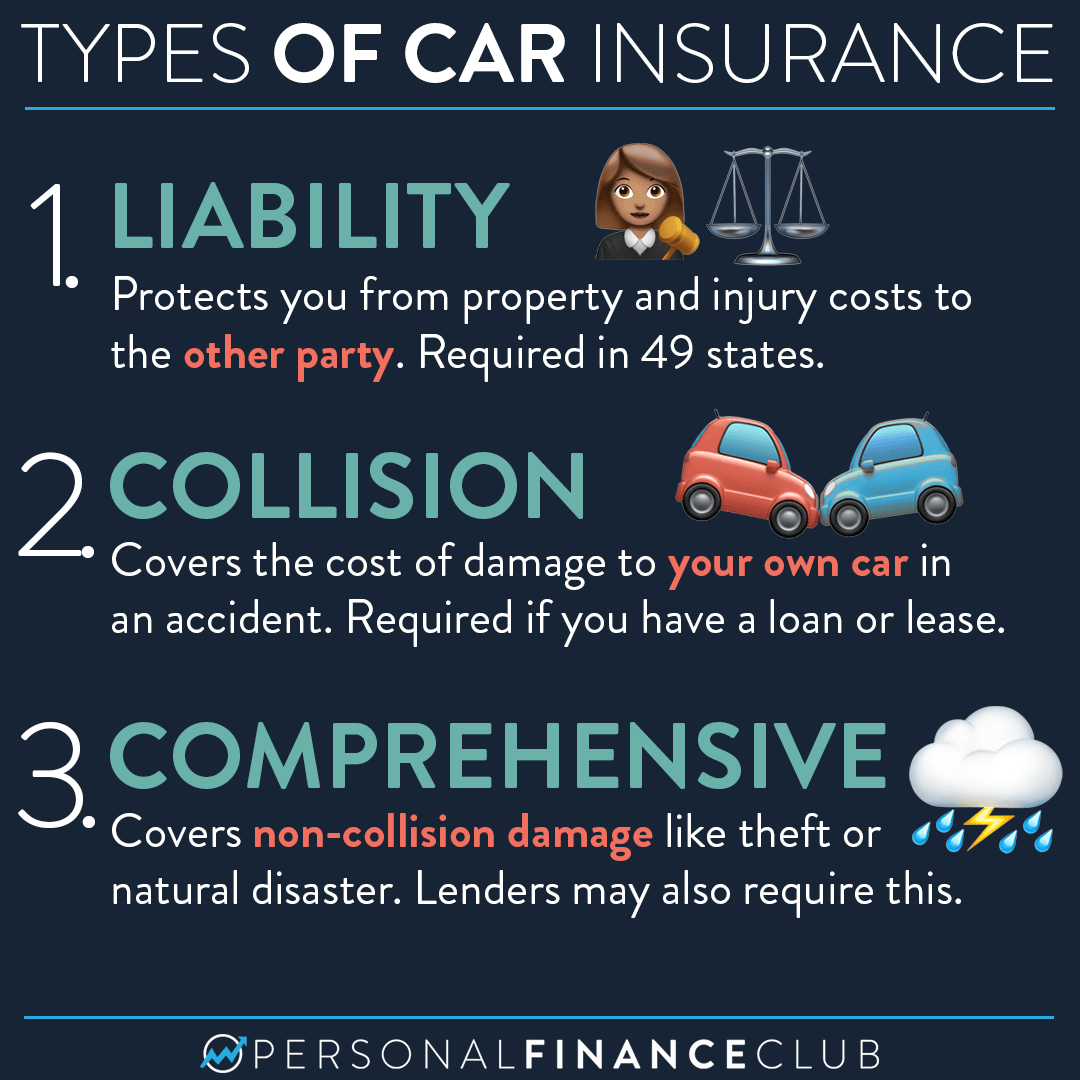
- Liability Coverage:This covers damages to other people and their property if you are at fault in an accident. It includes bodily injury liability and property damage liability.
- Collision Coverage:This covers damages to your vehicle if it is involved in an accident, regardless of who is at fault.
- Comprehensive Coverage:This covers damages to your vehicle from events other than accidents, such as theft, vandalism, or natural disasters.
- Uninsured/Underinsured Motorist Coverage:This protects you if you are involved in an accident with a driver who is uninsured or underinsured.
Types of Car Insurance Coverage
Now that you understand the basics of car insurance, let’s delve into the different types of coverage available. Understanding these options will help you determine which ones are essential for your specific needs and driving habits.
Liability Coverage
Liability coverage is a crucial component of car insurance, protecting you financially if you’re at fault in an accident that causes injury or damage to others. This coverage typically includes two main parts:
- Bodily Injury Liability:This coverage pays for medical expenses, lost wages, and other damages resulting from injuries you cause to others in an accident. It is typically expressed as a per-person limit and a per-accident limit. For example, a 25/50/10 policy means you have $25,000 in coverage per person, $50,000 per accident, and $10,000 for property damage.
- Property Damage Liability:This coverage pays for repairs or replacement of damaged property, such as another vehicle, a building, or a fence, that you cause in an accident. It is typically expressed as a single dollar amount, such as $50,000.
Example:You rear-end another car while driving, causing injuries to the other driver and damage to their vehicle. Your liability coverage will help pay for the other driver’s medical bills and the repairs to their car, up to the limits of your policy.
Collision Coverage
Collision coverage pays for repairs or replacement of your vehicle if it’s damaged in an accident, regardless of who is at fault. This coverage is optional and can be purchased with a deductible, which is the amount you pay out-of-pocket before your insurance kicks in.
- Benefits:Collision coverage is essential if you want to protect your investment in your car, as it helps you pay for repairs or replacement after an accident, even if you’re at fault.
- Limitations:Collision coverage doesn’t cover damage caused by events other than accidents, such as theft or vandalism. You’ll need comprehensive coverage for those situations.
Example:You hit a parked car while backing out of your driveway. Your collision coverage will help pay for the repairs to your vehicle, minus your deductible.
Comprehensive Coverage
Comprehensive coverage protects your vehicle against damage from events other than accidents, such as:
- Theft
- Vandalism
- Fire
- Hail
- Flooding
Like collision coverage, comprehensive coverage is optional and has a deductible.
Example:A hailstorm damages your car’s paint and windshield. Your comprehensive coverage will help pay for the repairs, minus your deductible.
Uninsured/Underinsured Motorist Coverage
Uninsured/underinsured motorist coverage (UM/UIM) protects you if you’re injured in an accident caused by a driver who doesn’t have insurance or has insufficient coverage. This coverage can help pay for your medical bills, lost wages, and other damages.
- Benefits:UM/UIM coverage provides essential protection in situations where the other driver is uninsured or underinsured, ensuring you’re not left financially responsible for your own injuries and damages.
- Limitations:The amount of coverage provided by UM/UIM is usually limited to the limits of your liability coverage.
Example:You’re hit by a driver who doesn’t have insurance. Your UM/UIM coverage will help pay for your medical bills and other damages, up to the limits of your policy.
Personal Injury Protection (PIP)
PIP coverage, also known as no-fault insurance, covers your medical expenses and lost wages, regardless of who is at fault in an accident. This coverage is typically required in certain states.
- Benefits:PIP coverage provides immediate financial assistance for your medical needs and lost income after an accident, regardless of who is at fault.
- Limitations:PIP coverage has limits on the amount of benefits you can receive. It may also have a deductible.
Example:You’re involved in a minor accident and suffer minor injuries. Your PIP coverage will help pay for your medical bills and lost wages, even if you were at fault.
Medical Payments Coverage
Medical payments coverage (Med Pay) is similar to PIP but provides coverage for medical expenses, regardless of fault, for you and your passengers, up to the limits of your policy. It’s optional in most states.
- Benefits:Med Pay provides a safety net for medical expenses in case of an accident, regardless of who is at fault. It can be particularly helpful for passengers who are not covered by their own insurance.
- Limitations:Med Pay coverage is typically limited to a lower amount than PIP coverage.
Example:You’re a passenger in a friend’s car when they get into an accident. Your Med Pay coverage will help pay for your medical bills, even if your friend was at fault.
Rental Reimbursement Coverage
Rental reimbursement coverage pays for a rental car while your vehicle is being repaired after an accident or other covered event. This coverage is optional and has a daily or weekly limit.
- Benefits:Rental reimbursement coverage can help minimize the inconvenience of being without your car after an accident.
- Limitations:The amount of coverage is limited to a certain number of days or weeks. You may also be required to pay a deductible.
Example:Your car is damaged in an accident and needs to be repaired for a week. Your rental reimbursement coverage will help pay for a rental car while your vehicle is being repaired.
Factors Influencing Car Insurance Premiums
Car insurance premiums are not a one-size-fits-all proposition. Several factors come into play, determining the cost of your coverage. Understanding these factors can help you make informed decisions about your insurance and potentially lower your premiums.
Factors Affecting Car Insurance Premiums
Insurance companies use a complex formula to calculate premiums. This formula takes into account various factors that assess your risk as a driver. The higher your risk, the higher your premium will be.
| Factor | Impact on Premium | Example | Explanation |
|---|---|---|---|
| Driving History | Higher risk, higher premium | A driver with multiple speeding tickets or accidents will likely pay more than a driver with a clean record. | Your driving history is a strong indicator of your future driving behavior. Insurance companies use this information to assess your risk. |
| Vehicle Type | More expensive vehicles, higher premiums | A luxury sports car will generally cost more to insure than a basic sedan. | The cost of repairing or replacing your vehicle is a significant factor in determining your premium. More expensive cars are more costly to fix. |
| Location | Higher crime rates or accident rates, higher premiums | Living in a city with a high density of vehicles and a higher crime rate will typically result in higher premiums. | Insurance companies assess the risk of accidents and theft based on your location. Areas with higher crime or accident rates are considered riskier. |
| Age | Younger drivers, higher premiums | Drivers under 25 are statistically more likely to be involved in accidents. | Insurance companies recognize that younger drivers have less experience and are more prone to accidents. This increased risk is reflected in higher premiums. |
| Credit Score | Lower credit score, higher premiums | Individuals with lower credit scores are often considered higher risk by insurance companies. | Credit score is seen as a measure of financial responsibility. Individuals with poor credit history are more likely to have difficulty paying their insurance premiums. |
Choosing the Right Car Insurance Policy

Finding the perfect car insurance policy involves more than just picking the cheapest option. It’s about tailoring your coverage to your individual needs and circumstances, ensuring you’re protected in the event of an accident or other unforeseen event.
Comparing Insurance Companies and Their Offerings
To make an informed decision, it’s crucial to compare different insurance companies and their offerings. Insurance companies often have unique strengths and weaknesses, and understanding these differences can help you find the best fit for your needs.
- Coverage Options:Compare the types of coverage offered by different companies, ensuring they meet your specific requirements. Some companies might offer specialized coverage options for specific types of vehicles or drivers, like those with a clean driving record or high-value vehicles.
- Premiums and Discounts:Carefully analyze the premiums charged by different companies and look for discounts. Some companies might offer discounts for good driving records, safety features in your vehicle, or bundling multiple insurance policies with them.
- Customer Service and Claims Handling:Research the reputation of different companies regarding customer service and claims handling. Look for companies known for their responsiveness, transparency, and efficient claims processing.
- Financial Stability:Consider the financial stability of the insurance company. You want to ensure that your insurer will be able to pay out your claims in the event of an accident.
Coverage Limits, Deductibles, and Other Policy Features
Beyond comparing companies, you need to carefully consider the specific features of each policy, such as coverage limits, deductibles, and other policy provisions.
- Coverage Limits:Coverage limits define the maximum amount the insurance company will pay for a specific type of claim. For example, liability coverage limits determine the maximum amount your insurer will pay for bodily injury or property damage caused by an accident you’re responsible for.
Choosing adequate coverage limits is essential to ensure you’re financially protected in case of a significant accident.
- Deductibles:Your deductible is the amount you’re responsible for paying out of pocket before your insurance coverage kicks in. Higher deductibles generally lead to lower premiums, but you’ll have to pay more in case of a claim. Consider your financial situation and risk tolerance when choosing your deductible.
- Other Policy Features:Explore other policy features like roadside assistance, rental car coverage, and uninsured/underinsured motorist coverage. These features can provide additional protection and peace of mind, but they can also increase your premium. Carefully evaluate which features are essential for you.
Additional Car Insurance Options
Beyond the standard coverage types, various additional car insurance options can provide extra protection and peace of mind. These options offer specific coverage for situations that may not be covered by your basic policy.
Gap Insurance
Gap insurance bridges the gap between the actual cash value (ACV) of your vehicle and the amount you still owe on your car loan or lease. This can be particularly beneficial if you have a newer car and finance a significant portion of its purchase price.
- Description:Gap insurance covers the difference between the amount your insurance company pays for your totaled car and the remaining balance on your loan or lease.
- Benefits:It helps you avoid being stuck with a substantial debt if your car is totaled or stolen, even if you have comprehensive and collision coverage.
- When it might be necessary:If you have a new car with a large loan or lease, gap insurance can be a wise investment, as the value of your car depreciates rapidly in the first few years.
Roadside Assistance, What are the different types of car insurance?
Roadside assistance provides emergency services like towing, flat tire changes, jump starts, and lockout assistance. It can be a lifesaver if you experience a breakdown or an unexpected situation on the road.
- Description:Roadside assistance provides help with various roadside emergencies, such as flat tires, dead batteries, lockouts, and towing.
- Benefits:It gives you peace of mind knowing that help is available if you encounter a roadside emergency, saving you time and potential stress.
- When it might be necessary:It can be especially useful if you frequently drive long distances or live in a remote area.
Accident Forgiveness
Accident forgiveness is a feature that waives the premium increase that typically follows an at-fault accident. This can be valuable for drivers who have a clean driving record and want to protect their premiums from a single lapse in judgment.
- Description:Accident forgiveness prevents your insurance premium from increasing after your first at-fault accident, even if you’re at fault.
- Benefits:It helps maintain your premium rates and protects your financial well-being, especially if you have a clean driving history.
- When it might be necessary:This option can be particularly useful for drivers with a clean driving record who want to avoid a significant premium increase in case of a minor accident.
Rental Reimbursement
Rental reimbursement coverage helps cover the cost of a rental car while your vehicle is being repaired after an accident. This can be helpful if you rely on your car for daily transportation and need a replacement vehicle while yours is unavailable.
Understanding the different types of car insurance, like liability, collision, and comprehensive, is crucial for making informed decisions about your coverage. Once you’ve grasped the basics, you can start exploring ways to get the most affordable rates. Check out this helpful guide on How to get the cheapest car insurance quotes?
to learn some smart strategies for saving money on your premiums. After all, the right type of insurance and a competitive price can give you peace of mind on the road.
- Description:Rental reimbursement covers the cost of a rental car while your vehicle is being repaired after an accident, up to a certain limit.
- Benefits:It provides you with a temporary replacement vehicle, allowing you to maintain your daily routine while your car is being fixed.
- When it might be necessary:This coverage can be useful if you rely on your car for work or other essential activities and need a reliable replacement while your vehicle is out of commission.
Other Additional Coverage Options
Other additional coverage options include:
- Loan/Lease Gap Insurance:Covers the difference between the actual cash value (ACV) of your vehicle and the amount you still owe on your car loan or lease.
- Towing and Labor Coverage:Provides reimbursement for towing and labor costs if your vehicle breaks down.
- Personal Injury Protection (PIP):Covers medical expenses and lost wages for you and your passengers, regardless of fault.
- Uninsured/Underinsured Motorist Coverage:Provides coverage if you are involved in an accident with a driver who is uninsured or underinsured.
- Custom Parts and Equipment Coverage:Covers the cost of replacing or repairing custom parts or equipment that is not covered under standard comprehensive or collision coverage.
Tips for Saving on Car Insurance
Car insurance is an essential expense for vehicle owners, but it can be costly. Luckily, there are various ways to lower your premiums and save money on your car insurance. By implementing these strategies, you can reduce your insurance costs without compromising coverage.
Strategies for Lowering Premiums
Many factors influence your car insurance premiums. Understanding these factors can help you find ways to lower your costs. Here are some strategies you can use to save money:
- Maintain a Good Driving Record:Your driving history is a major factor in determining your insurance rates. Avoid traffic violations, accidents, and other incidents that can increase your premiums. A clean driving record reflects responsible driving habits, which insurance companies reward with lower rates.
- Shop Around and Compare Quotes:Don’t settle for the first insurance quote you receive. Contact multiple insurance providers and compare their rates. Using online comparison tools can streamline this process and help you find the best deal.
- Bundle Insurance Policies:Many insurance companies offer discounts for bundling multiple policies, such as car insurance, homeowners insurance, or renters insurance. By combining your policies, you can often receive a significant discount.
- Increase Your Deductible:Your deductible is the amount you pay out of pocket before your insurance coverage kicks in. Increasing your deductible can lower your premium. However, ensure you can afford the higher deductible in case of an accident.
- Choose a Safe Vehicle:Insurance companies consider the safety features and theft risk of your vehicle when setting premiums. Choosing a car with advanced safety features and a lower theft rate can lead to lower insurance costs.
- Take a Defensive Driving Course:Completing a defensive driving course can demonstrate your commitment to safe driving and may qualify you for discounts. These courses teach you how to anticipate potential hazards and react safely in various driving situations.
- Pay Your Premiums on Time:Making timely payments shows financial responsibility and can help you avoid late fees and other penalties. Prompt payment can also improve your credit score, which some insurance companies consider when setting rates.
- Ask About Discounts:Insurance companies offer various discounts for specific groups, such as good students, seniors, or members of certain organizations. Be sure to inquire about any discounts you may qualify for.
Epilogue: What Are The Different Types Of Car Insurance?
Choosing the right car insurance policy is a crucial decision, and understanding the different types of coverage is the first step. By carefully considering your individual needs, driving habits, and budget, you can find the policy that provides the right level of protection without breaking the bank.
Remember, the right car insurance can be your safety net in the event of an accident, giving you peace of mind on the road.
Answers to Common Questions
How often should I review my car insurance policy?
It’s generally recommended to review your car insurance policy at least annually, or whenever you experience a significant life change such as getting married, buying a new car, or moving to a different location.
What are the consequences of driving without car insurance?
Driving without car insurance is illegal in most jurisdictions and can result in hefty fines, suspension of your driver’s license, and even jail time. It can also leave you financially responsible for any damages or injuries you cause in an accident.
How can I get a car insurance quote?
You can obtain a car insurance quote by contacting insurance companies directly, using online comparison websites, or speaking to an insurance broker.