
Financial planning for entrepreneurs and small business owners is often overlooked, but it’s a crucial element of success. Without a solid financial plan, your business is like a ship without a rudder, drifting aimlessly in a sea of uncertainty.
This guide will equip you with the knowledge and tools to navigate the financial waters and steer your business towards a prosperous future.
We’ll explore everything from budgeting and cash flow management to funding options, debt management, and investment strategies. You’ll learn how to create a comprehensive financial plan, minimize risks, and maximize your chances of achieving your business goals.
The Importance of Financial Planning for Entrepreneurs and Small Business Owners
Financial planning is not just a good idea for entrepreneurs and small business owners; it’s absolutely crucial for their success. Without a solid financial plan, navigating the complexities of running a business can be like sailing a ship without a compass – risky and prone to unexpected storms.
Why Financial Planning is Crucial
Financial planning is the roadmap that guides your business towards its goals. It helps you understand your current financial position, set realistic objectives, and develop strategies to achieve them.
- Clearer Vision:A financial plan provides a clear vision of your business’s financial health, allowing you to make informed decisions about investments, expenses, and revenue generation.
- Better Decision Making:With a financial plan, you can analyze data and trends, identify potential risks and opportunities, and make better decisions about resource allocation and growth strategies.
- Enhanced Funding Opportunities:A well-structured financial plan demonstrates your business’s viability and potential to investors and lenders, increasing your chances of securing funding.
- Improved Cash Flow Management:Financial planning helps you forecast cash flow, manage expenses, and optimize revenue collection, ensuring you have enough liquidity to operate smoothly and meet your financial obligations.
- Reduced Risk:A comprehensive financial plan helps you identify and mitigate potential financial risks, such as economic downturns, unexpected expenses, or cash flow shortages.
Consequences of Neglecting Financial Planning
Ignoring financial planning can have serious consequences for your business, leading to:
- Financial Instability:Without a financial plan, your business may face unpredictable cash flow, making it difficult to cover expenses, invest in growth, or manage debt.
- Missed Opportunities:A lack of financial planning can lead to missed opportunities for expansion, investment, or strategic partnerships due to limited financial resources or unclear financial goals.
- Increased Risk:Without a clear financial roadmap, your business may be more vulnerable to economic downturns, market fluctuations, or unexpected events that can significantly impact its stability.
- Poor Decision Making:Without a structured financial framework, decisions about spending, investment, and resource allocation may be based on intuition rather than data, leading to suboptimal outcomes.
- Difficulty in Securing Funding:Lenders and investors are more likely to fund businesses with well-defined financial plans that demonstrate their viability and growth potential.
Real-World Examples of Successful Entrepreneurs Who Prioritized Financial Planning
Many successful entrepreneurs attribute their success to prioritizing financial planning. For example:
- Elon Musk:Musk, the visionary behind Tesla and SpaceX, is known for his meticulous financial planning. He carefully manages his companies’ finances, ensuring they have sufficient resources to fund ambitious projects and achieve long-term growth.
- Oprah Winfrey:Winfrey, the media mogul, built her empire through strategic financial planning and investment. She understood the importance of managing her finances effectively and investing in projects that aligned with her long-term goals.
- Jeff Bezos:Bezos, the founder of Amazon, implemented a robust financial plan from the early days of his company. This plan helped him navigate the challenges of rapid growth, manage expenses, and secure funding for expansion.
Key Elements of a Comprehensive Financial Plan
A solid financial plan is crucial for any entrepreneur or small business owner. It provides a roadmap for achieving your financial goals, managing risks, and making informed decisions. This plan acts as a compass, guiding you through the often turbulent waters of entrepreneurship.
Components of a Comprehensive Financial Plan
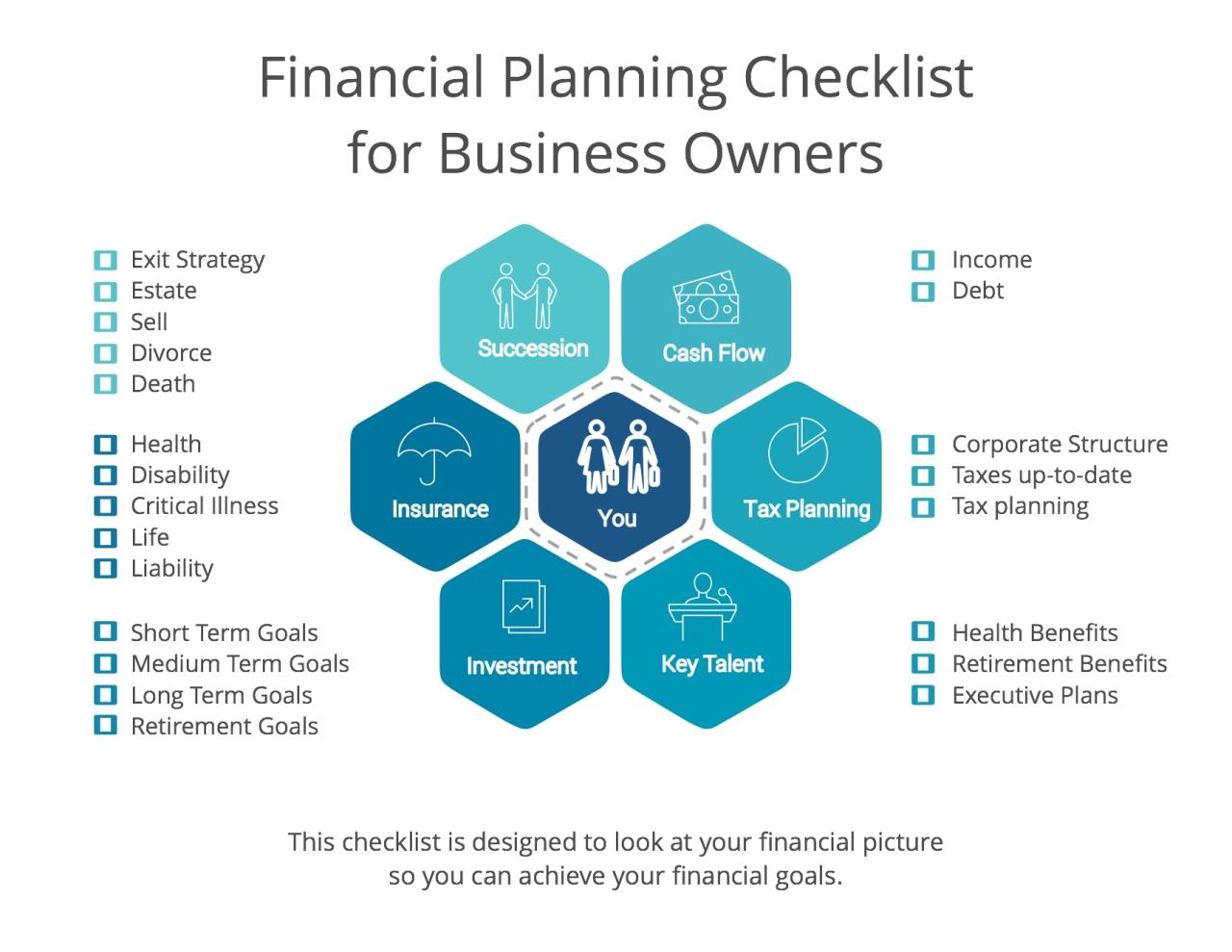
A comprehensive financial plan for entrepreneurs and small business owners should include several key elements. These elements work together to create a complete picture of your financial health and help you make informed decisions.
| Element | Description | Importance | Implementation |
|---|---|---|---|
| Business Plan | A detailed document outlining your business goals, strategies, and financial projections. | Provides a clear roadmap for your business, attracting investors and lenders. | Develop a detailed business plan that includes market analysis, competitive analysis, marketing strategies, and financial projections. |
| Financial Statements | Regularly prepared reports, including income statements, balance sheets, and cash flow statements. | Provide insights into your business’s financial performance, identifying areas for improvement. | Use accounting software or hire a professional accountant to prepare your financial statements. |
| Budgeting | A plan for allocating your income and expenses. | Ensures you have enough cash on hand to cover operating costs and invest in growth. | Create a detailed budget that includes both fixed and variable expenses, and track your actual spending against your budget. |
| Cash Flow Management | Monitoring and managing the inflow and outflow of cash. | Helps avoid cash flow problems and ensures you have enough cash to meet your obligations. | Develop a cash flow forecast and implement strategies to improve cash flow, such as offering discounts for early payments or extending payment terms. |
| Debt Management | Strategies for managing and paying off business loans. | Minimizes interest payments and avoids defaulting on loans. | Develop a debt repayment plan, prioritize high-interest debt, and consider refinancing options. |
| Investment Strategies | Plans for investing surplus cash in assets that generate returns. | Helps grow your business and build wealth. | Research different investment options, such as stocks, bonds, or real estate, and choose investments that align with your risk tolerance and financial goals. |
| Tax Planning | Strategies for minimizing your tax liability. | Maximizes your after-tax profits and helps you stay compliant with tax regulations. | Consult with a tax advisor to develop a tax plan that includes deductions, credits, and other strategies to minimize your tax burden. |
| Insurance | Protection against unexpected events, such as accidents, lawsuits, or natural disasters. | Safeguards your business and personal assets from financial losses. | Review your insurance needs regularly and purchase appropriate coverage, including liability, property, and business interruption insurance. |
| Risk Management | Strategies for identifying and mitigating potential risks to your business. | Helps prevent financial losses and protects your business from unforeseen events. | Conduct a risk assessment, develop contingency plans, and implement risk mitigation strategies. |
| Succession Planning | A plan for the future ownership and management of your business. | Ensures a smooth transition of ownership and maintains the value of your business. | Develop a succession plan that Artikels your exit strategy, identifies potential successors, and ensures a smooth transition of ownership. |
Creating a Financial Plan
Developing a financial plan is an iterative process that requires careful planning and execution. Here’s a step-by-step guide to help you create a comprehensive financial plan:
- Define your goals.Start by clearly defining your short-term and long-term financial goals. What do you want to achieve with your business? Do you want to increase revenue, expand operations, or sell your business?
- Gather financial information.Collect all relevant financial information, including income statements, balance sheets, cash flow statements, and tax returns.
- Analyze your current financial situation.Use your financial information to assess your current financial health. This includes understanding your cash flow, profitability, and debt levels.
- Develop a budget.Create a detailed budget that includes all your expected income and expenses. Track your actual spending against your budget to ensure you stay on track.
- Develop a cash flow forecast.Project your cash inflows and outflows for the next few months or years. This helps you anticipate potential cash flow problems and take steps to avoid them.
- Establish investment strategies.Decide how you will invest any surplus cash. Consider your risk tolerance and financial goals when making investment decisions.
- Plan for taxes.Consult with a tax advisor to develop a tax plan that minimizes your tax liability.
- Implement your plan.Put your financial plan into action and track your progress regularly. Make adjustments as needed to ensure you stay on track.
- Review and update your plan.Review your financial plan at least annually, or more often if your business circumstances change. Make adjustments to your plan as needed to reflect your current goals and financial situation.
Budgeting and Cash Flow Management

A well-structured budget and effective cash flow management are the cornerstones of any successful entrepreneurial journey. They provide a roadmap for your financial health, allowing you to allocate resources wisely, anticipate potential challenges, and make informed decisions that drive sustainable growth.
Creating a Comprehensive Budget Template
A budget is a detailed financial plan that Artikels your expected income and expenses over a specific period. It’s a vital tool for entrepreneurs and small business owners to track their financial performance, identify areas for improvement, and make informed decisions about resource allocation.Here’s a comprehensive budget template tailored to the needs of entrepreneurs and small business owners:
- Income:
- Sales Revenue
- Service Fees
- Subscription Income
- Other Income
- Expenses:
- Cost of Goods Sold (COGS):
- Raw Materials
- Direct Labor
- Manufacturing Overhead
- Operating Expenses:
- Rent
- Utilities
- Salaries and Wages
- Marketing and Advertising
- Insurance
- Office Supplies
- Professional Services
- Travel and Entertainment
- Depreciation and Amortization
- Interest Expense
- Cost of Goods Sold (COGS):
Common Budgeting Mistakes to Avoid
Avoiding common budgeting mistakes is crucial for maintaining financial stability. Here are some pitfalls to be aware of:
- Underestimating Expenses:Failing to account for all potential expenses, both fixed and variable, can lead to budget shortfalls.
- Overestimating Income:Overly optimistic projections about revenue can create a false sense of security and leave you unprepared for unexpected fluctuations.
- Lack of Regular Monitoring:Failing to regularly review and update your budget can result in a disconnect between your actual financial performance and your plan.
- Ignoring Cash Flow:Focusing solely on profit and loss statements without considering cash flow can lead to liquidity problems, even if the business is profitable.
Effective Cash Flow Management Strategies
Effective cash flow management is essential for entrepreneurs and small business owners. It involves ensuring a steady stream of cash coming into the business to cover operating expenses and invest in growth. Here are some key strategies:
- Develop a Cash Flow Forecast:Predicting future cash inflows and outflows allows you to anticipate potential cash shortages and plan accordingly.
- Optimize Accounts Receivable:Implement efficient invoicing and collection practices to ensure timely payments from customers.
- Negotiate Favorable Payment Terms:Secure longer payment terms from suppliers to manage cash outflows effectively.
- Manage Inventory Levels:Avoid tying up too much cash in inventory by maintaining optimal stock levels and implementing inventory management techniques.
- Explore Financing Options:Consider short-term financing options, such as lines of credit, to bridge temporary cash flow gaps.
Forecasting Cash Flow
Cash flow forecasting is a crucial aspect of financial planning. It involves projecting future cash inflows and outflows to assess the business’s liquidity position. Here’s a simplified approach to cash flow forecasting:
- Gather Historical Data:Analyze past cash flow statements to identify patterns and trends.
- Develop Revenue Projections:Estimate future sales based on market conditions, marketing efforts, and sales history.
- Project Expenses:Forecast future expenses based on current spending patterns and anticipated changes.
- Consider Seasonality:Account for seasonal variations in revenue and expenses.
- Prepare a Cash Flow Statement:Use a cash flow statement template to summarize projected inflows and outflows.
Analyzing Financial Statements
Financial statements provide valuable insights into the financial health of your business. By analyzing these statements, you can identify areas for improvement, make informed decisions, and track progress toward your financial goals.
- Income Statement:Shows your revenue and expenses over a specific period, providing a picture of your profitability.
- Balance Sheet:Provides a snapshot of your assets, liabilities, and equity at a specific point in time.
- Cash Flow Statement:Tracks the movement of cash into and out of your business over a period, revealing your liquidity position.
By using these financial statements effectively, you can gain a comprehensive understanding of your business’s financial performance and make informed decisions to achieve sustainable growth.
Funding and Financing Options
Securing the necessary capital is a crucial step for any entrepreneur or small business owner. Understanding the various funding and financing options available is essential for making informed decisions that align with your business needs and goals.
Types of Funding and Financing Options
Entrepreneurs and small business owners have access to a diverse range of funding and financing options. Each option comes with its own set of advantages and disadvantages, which you should carefully consider before making a decision.
- Bootstrapping:This involves using personal savings, revenue generated from sales, or investments from friends and family to fund your business. Bootstrapping is a common approach for early-stage startups, allowing for greater control and flexibility. However, it can limit growth potential and require a longer runway to achieve profitability.
- Debt Financing:Obtaining a loan from a bank, credit union, or online lender is a common way to secure capital. This option offers flexibility in terms of repayment terms and interest rates. However, debt financing comes with the responsibility of repaying the loan, which can strain cash flow and potentially lead to financial distress if not managed carefully.
- Equity Financing:This involves selling a portion of your business ownership to investors in exchange for capital. Equity financing can provide significant capital for growth, but it also results in dilution of ownership and control. The terms of equity financing can vary widely, depending on the stage of your business and the investors involved.
- Grants:Grants are non-repayable funds provided by government agencies, foundations, or other organizations to support specific projects or initiatives. Grants can be a valuable source of funding, particularly for businesses that address social or environmental issues. However, the competition for grants can be fierce, and the eligibility criteria can be stringent.
- Crowdfunding:This involves raising capital from a large number of individuals through online platforms. Crowdfunding can be a powerful way to generate excitement and early support for your business. However, it requires careful planning and execution to be successful. It also requires transparency and engaging with potential investors.
Managing Debt and Credit
Debt can be a powerful tool for entrepreneurs, enabling them to invest in growth and expansion. However, unchecked debt can quickly become a burden, hindering profitability and even jeopardizing the business’s future. This section delves into the importance of managing debt and credit effectively, exploring strategies to minimize debt and maintain a healthy credit score.
Minimizing Debt and Maintaining a Healthy Credit Score
Maintaining a healthy credit score is crucial for entrepreneurs. A good credit score unlocks favorable loan terms, lowers interest rates, and strengthens the business’s financial standing. Here are some key strategies to minimize debt and maintain a healthy credit score:
- Develop a Debt Management Plan:Create a comprehensive debt management plan outlining strategies for paying down existing debt and avoiding future debt accumulation. This plan should prioritize high-interest debt and include realistic repayment goals.
- Negotiate Lower Interest Rates:Contact lenders to discuss potential interest rate reductions on existing loans. If possible, consolidate multiple debts into a single loan with a lower interest rate.
- Avoid Unnecessary Debt:Carefully evaluate every debt-related decision. Avoid taking on unnecessary debt for non-essential expenses. Focus on using debt strategically for business investments with a clear return on investment.
- Monitor Credit Score Regularly:Regularly check your credit score using free online services. This allows you to identify any errors and take prompt action to correct them.
- Pay Bills on Time:Consistent on-time payments are crucial for maintaining a good credit score. Set up reminders or automated payments to ensure timely payments.
- Use Credit Cards Wisely:Use credit cards strategically, keeping balances low and paying them off in full each month. Avoid using credit cards for unnecessary purchases.
Impact of Debt on Business Growth and Profitability
Debt can impact a business’s growth and profitability in various ways:
- Increased Interest Expenses:High debt levels lead to higher interest expenses, reducing profits and cash flow available for reinvestment in the business.
- Limited Access to Capital:A high debt-to-equity ratio can make it difficult to secure additional funding from lenders or investors, limiting growth opportunities.
- Financial Stress:Excessive debt can create financial stress, distracting entrepreneurs from focusing on core business operations and strategic decision-making.
- Risk of Bankruptcy:Unmanageable debt can ultimately lead to financial distress and even bankruptcy, jeopardizing the business and its stakeholders.
Negotiating Favorable Loan Terms and Managing Debt Effectively
Negotiating favorable loan terms and managing debt effectively are crucial for entrepreneurs:
- Shop Around for Lenders:Compare loan terms and interest rates from multiple lenders to secure the best deal. Consider factors like interest rates, loan fees, and repayment terms.
- Improve Credit Score:A higher credit score can lead to lower interest rates and more favorable loan terms. Focus on strategies to improve your credit score before applying for loans.
- Strong Business Plan:A well-structured business plan outlining your business’s financial health and growth potential can impress lenders and improve your chances of securing favorable loan terms.
- Collateral:Offering collateral, such as real estate or equipment, can enhance your loan application and potentially secure lower interest rates.
- Repayment Schedule:Negotiate a repayment schedule that aligns with your business’s cash flow. Consider options like balloon payments or interest-only payments during the initial phase of the business.
- Debt Consolidation:If you have multiple loans with high interest rates, consider consolidating them into a single loan with a lower interest rate. This can simplify repayment and reduce overall interest expenses.
- Debt-to-Equity Ratio:Monitor your debt-to-equity ratio, which measures the proportion of debt financing compared to equity financing. A high debt-to-equity ratio can indicate a high level of financial risk. Aim for a balanced ratio that aligns with your business’s financial goals.
Investment and Growth Strategies
Investing is not just about making money; it’s about fueling your business’s growth and securing its long-term financial health. As an entrepreneur, investing wisely is crucial for navigating the unpredictable business landscape and building a sustainable future.
Financial planning for entrepreneurs and small business owners isn’t just about saving for retirement; it’s about building a secure future for your business and yourself. A key component of that plan is investing, and even if you’re a complete beginner, understanding the basics is crucial.
Understanding the basics of investing for beginners can empower you to make smart choices that will grow your wealth and help you weather any economic storm. By taking the time to learn about investing, you’ll be better equipped to make informed decisions that will benefit your business and your personal finances in the long run.
Investment Options for Entrepreneurs
Investing your hard-earned capital requires careful consideration. The right investment strategy can propel your business forward, while a poorly chosen one can lead to financial setbacks. Here are some common investment options suitable for entrepreneurs and small business owners:
- Real Estate: Investing in real estate, whether commercial or residential, can offer a steady stream of income and potential appreciation. However, it’s important to conduct thorough market research and consider factors like location, property type, and potential risks before making any investments.
- Stocks: Stocks represent ownership in publicly traded companies. Investing in stocks can offer high potential returns, but it’s also associated with significant risk. Consider diversifying your portfolio and investing in a mix of stocks from different sectors to mitigate risk.
- Bonds: Bonds are debt securities issued by companies or governments to raise capital. They typically offer lower returns than stocks but are considered less risky. Investing in a mix of bonds can provide stability and diversification to your portfolio.
- Mutual Funds and Exchange-Traded Funds (ETFs): These funds pool money from multiple investors to invest in a diversified portfolio of assets, such as stocks, bonds, or real estate. They offer a convenient and cost-effective way to diversify your investments.
- Venture Capital: Venture capital firms invest in early-stage companies with high growth potential. This option can provide significant funding but requires careful consideration of the risks involved.
- Angel Investors: Angel investors are high-net-worth individuals who invest in early-stage companies. They can offer valuable mentorship and connections in addition to funding.
Risk Management and Return Maximization
Investing always involves risk. While there’s no guarantee of returns, you can take steps to manage risk and maximize your potential gains:
- Diversification: Spreading your investments across different asset classes, sectors, and industries can help mitigate risk. By investing in a variety of assets, you reduce your exposure to any single investment’s performance.
- Due Diligence: Before investing in any asset, conduct thorough research to understand the risks and potential returns. This includes analyzing financial statements, market trends, and the company’s management team.
- Long-Term Perspective: Investing is a long-term game. Avoid making impulsive decisions based on short-term market fluctuations. Instead, focus on your long-term goals and invest in assets that align with your investment horizon.
- Professional Advice: Consider consulting with a financial advisor to develop a personalized investment strategy that aligns with your risk tolerance, financial goals, and business objectives.
Investment Strategies for Business Growth
Investing in your business is crucial for long-term growth and success. Here are some strategies to consider:
- Research and Development (R&D): Investing in R&D can lead to innovative products or services that differentiate your business from competitors. This can involve developing new technologies, improving existing products, or conducting market research to identify new opportunities.
- Marketing and Advertising: Investing in effective marketing and advertising campaigns can help you reach new customers and increase brand awareness. This could involve online advertising, social media marketing, content marketing, or traditional media campaigns.
- Expansion and Growth: Investing in expanding your business operations, such as opening new locations, acquiring new equipment, or hiring additional staff, can fuel growth and increase your market share.
- Technology and Automation: Investing in technology and automation can streamline operations, improve efficiency, and reduce costs. This could involve implementing new software, upgrading existing systems, or automating repetitive tasks.
Examples of Successful Investment Strategies
- Amazon: Amazon’s early investment in e-commerce infrastructure, logistics, and technology paved the way for its massive growth and dominance in the online retail market.
- Apple: Apple’s focus on innovation and product design, coupled with investments in marketing and brand building, has made it one of the most valuable companies in the world.
- Tesla: Tesla’s commitment to electric vehicle technology and sustainable energy solutions has attracted significant investment and propelled its growth in the automotive industry.
Tax Planning and Compliance
Tax planning is crucial for entrepreneurs and small business owners, as it can significantly impact their bottom line. By understanding tax implications and implementing effective strategies, you can minimize your tax liability and ensure compliance with tax regulations.
Tax Considerations for Entrepreneurs and Small Business Owners
Entrepreneurs and small business owners face unique tax considerations compared to traditional employees. Understanding these differences is essential for effective tax planning.
- Self-Employment Taxes:As a business owner, you are responsible for paying both the employer and employee portions of Social Security and Medicare taxes, known as self-employment taxes. This can significantly impact your overall tax liability.
- Business Structure:The legal structure of your business, such as a sole proprietorship, partnership, LLC, or corporation, will determine how your business income is taxed. Each structure has its own set of tax implications.
- Tax Rates:Business income is subject to different tax rates than wages, depending on the type of business and its structure. It is important to understand the applicable tax rates for your specific business.
- Estimated Taxes:You are required to pay estimated taxes throughout the year to avoid penalties. These payments are based on your anticipated income and tax liability.
Common Tax Deductions and Credits
Several tax deductions and credits are available to entrepreneurs and small business owners, which can significantly reduce your tax liability.
- Home Office Deduction:If you use a portion of your home for business purposes, you can deduct expenses related to that space, including rent, utilities, and depreciation.
- Business Expenses:Most ordinary and necessary business expenses, such as rent, utilities, supplies, and advertising, are deductible.
- Depreciation:You can deduct a portion of the cost of long-term assets, such as equipment and vehicles, over their useful life. This allows you to spread the cost of these assets over time.
- Research and Development (R&D) Tax Credit:Businesses that engage in research and development activities may qualify for a tax credit that can offset a portion of their tax liability.
- Small Business Health Insurance Tax Credit:This credit is available to small businesses that provide health insurance to their employees. The credit can offset a portion of the premium costs.
Strategies for Minimizing Tax Liability
By implementing effective tax planning strategies, you can minimize your tax liability and maximize your after-tax income.
- Keep Accurate Records:Maintain meticulous records of all business income and expenses. This will help you identify eligible deductions and ensure accuracy in your tax filings.
- Maximize Deductions:Utilize all available deductions and credits to reduce your taxable income. Consult with a tax professional to ensure you are taking advantage of all applicable deductions.
- Consider Business Structure:Choose a business structure that optimizes your tax situation. Factors to consider include liability protection, tax rates, and administrative complexity.
- Plan for Future Growth:As your business grows, anticipate future tax implications and adjust your tax planning strategies accordingly. This may involve incorporating new business entities or making strategic investments.
- Consult with a Tax Professional:Seek professional guidance from a qualified tax advisor to ensure compliance with tax regulations and develop effective tax planning strategies.
Insurance and Risk Management
As an entrepreneur or small business owner, you face numerous risks that can disrupt your operations, impact your finances, and even threaten your livelihood. Having the right insurance policies and implementing effective risk management strategies are essential to protect your business and your personal assets.
Essential Insurance Policies
A comprehensive insurance plan provides a safety net, safeguarding your business from unforeseen events. Here’s a list of essential insurance policies for entrepreneurs and small business owners:
- General Liability Insurance:This policy protects your business from claims arising from bodily injury or property damage caused by your business operations or your employees. This coverage is crucial for protecting your business from lawsuits, especially if you have clients visiting your premises or your employees work off-site.
- Product Liability Insurance:If your business manufactures or sells products, product liability insurance protects you from claims arising from defects or injuries caused by your products. It covers legal costs and damages associated with product-related lawsuits.
- Property Insurance:This policy protects your business property, including buildings, equipment, inventory, and furniture, against damage caused by fire, theft, natural disasters, and other covered perils. It helps ensure that you can recover from a disaster and continue operating.
- Workers’ Compensation Insurance:If you have employees, workers’ compensation insurance is mandatory in most states. This policy covers medical expenses, lost wages, and other benefits for employees who are injured or become ill on the job. It protects you from lawsuits and ensures that your employees are taken care of in case of work-related accidents.
- Business Interruption Insurance:This policy provides financial protection in case your business is forced to shut down due to a covered event, such as a fire or natural disaster. It helps cover lost income, ongoing expenses, and other costs during the interruption period, allowing you to recover and resume operations more quickly.
- Cyber Liability Insurance:In today’s digital age, cyberattacks are a significant threat to businesses. Cyber liability insurance protects you from financial losses and legal liabilities arising from data breaches, cyber extortion, and other cyber-related incidents. It covers costs associated with data recovery, legal defense, and regulatory fines.
Risk Management Strategies
Proactive risk management is crucial for minimizing the impact of potential threats to your business. Here are some effective strategies:
- Identify Potential Risks:Conduct a thorough risk assessment to identify all potential threats to your business. This could include natural disasters, economic downturns, competition, cyberattacks, employee misconduct, and legal issues. You can use tools like SWOT analysis (Strengths, Weaknesses, Opportunities, Threats) to identify these risks.
- Evaluate Risk Probability and Impact:Once you’ve identified potential risks, evaluate their probability of occurring and the potential impact on your business. Prioritize risks based on their likelihood and severity, focusing on those with the highest potential for harm.
- Develop Risk Mitigation Strategies:For each identified risk, develop strategies to mitigate its impact. This could involve implementing preventive measures, transferring risk through insurance, reducing the likelihood of the risk occurring, or accepting the risk if the potential impact is minimal.
- Implement and Monitor Risk Management Plan:Once you’ve developed a risk management plan, implement it across your business operations. Regularly review and update your plan as your business evolves and new risks emerge. This ensures your plan remains effective and responsive to changing circumstances.
Insurance Policy and Risk Management Checklist
Here’s a checklist to guide you in selecting the right insurance policies and implementing effective risk management strategies:
- General Liability Insurance:Determine the appropriate coverage limits based on your business operations and potential risks. Consider adding endorsements for specific activities, such as professional liability or product liability.
- Product Liability Insurance:If your business manufactures or sells products, obtain product liability insurance with sufficient coverage to protect you from potential claims.
- Property Insurance:Determine the appropriate coverage limits based on the value of your business property and consider adding endorsements for specific perils, such as flood or earthquake.
- Workers’ Compensation Insurance:If you have employees, obtain workers’ compensation insurance with the required coverage for your state. Consider additional coverage options, such as employee benefits or disability insurance.
- Business Interruption Insurance:Determine the appropriate coverage limits based on your business’s revenue and expenses. Consider adding endorsements for specific events, such as cyberattacks or pandemic outbreaks.
- Cyber Liability Insurance:If your business handles sensitive data or relies on technology, obtain cyber liability insurance with coverage for data breaches, cyber extortion, and other cyber-related incidents.
- Risk Assessment:Conduct a thorough risk assessment to identify potential threats to your business. Use tools like SWOT analysis to identify these risks.
- Risk Mitigation Strategies:Develop strategies to mitigate the impact of identified risks. This could involve implementing preventive measures, transferring risk through insurance, reducing the likelihood of the risk occurring, or accepting the risk if the potential impact is minimal.
- Risk Management Plan:Implement and monitor a comprehensive risk management plan across your business operations. Regularly review and update your plan as your business evolves and new risks emerge.
Retirement Planning and Succession Planning: Financial Planning For Entrepreneurs And Small Business Owners
Retirement planning and succession planning are crucial aspects of financial planning for entrepreneurs and small business owners. These strategies ensure financial security in the future and guarantee the long-term sustainability of the business.
Retirement Planning for Entrepreneurs
Retirement planning for entrepreneurs is essential as they are responsible for their own retirement savings. Traditional retirement plans like 401(k)s and IRAs may not be readily available to business owners. However, they can utilize alternative strategies to secure their financial future.
- Solo 401(k): A retirement plan designed for self-employed individuals and small business owners. It allows for both employee and employer contributions, offering tax advantages and potential for higher contributions compared to traditional 401(k)s.
- Simplified Employee Pension (SEP) IRA: A retirement plan that allows self-employed individuals and small business owners to contribute a percentage of their net earnings. It offers tax-deferred growth and withdrawals, making it a flexible and straightforward option.
- Defined Benefit Pension Plan: A retirement plan where the employer guarantees a specific monthly payment to the employee upon retirement. It offers predictable retirement income but requires significant financial resources and complex administration.
Succession Planning for Small Businesses
Succession planning involves creating a roadmap for the transfer of ownership and management of the business, ensuring its continuity and smooth transition. This is crucial for the long-term viability of the business and the financial security of the owner.
- Identify Potential Successors: The first step is to identify potential successors, which can include family members, employees, or external buyers. Evaluate their skills, experience, and commitment to the business.
- Develop a Succession Plan: A comprehensive succession plan Artikels the transfer of ownership, management responsibilities, and the financial arrangements involved. It should address key aspects like valuation, financing, and legal considerations.
- Implement and Monitor the Plan: Once the plan is developed, it should be implemented gradually, ensuring a smooth transition and minimizing disruption to the business. Regularly review and update the plan as needed.
Resources and Support for Entrepreneurs
Starting and running a business can be a challenging journey, but entrepreneurs don’t have to navigate it alone. A vast network of resources and support organizations is available to provide guidance, mentorship, and practical assistance.
Accessing Resources and Support Organizations, Financial planning for entrepreneurs and small business owners
These organizations play a crucial role in empowering entrepreneurs with the knowledge, tools, and connections needed to succeed. They offer a wide range of services, including:
- Business planning and development:Providing guidance on developing a comprehensive business plan, conducting market research, and identifying target customers.
- Financial planning and management:Offering workshops and resources on budgeting, cash flow management, funding options, and debt management.
- Marketing and sales:Providing training on digital marketing strategies, social media marketing, and customer acquisition.
- Networking and mentorship:Connecting entrepreneurs with experienced business leaders and mentors who can offer guidance and support.
- Legal and regulatory compliance:Providing information and assistance on legal requirements, licenses, and permits.
- Access to funding:Offering loans, grants, and investment opportunities to help entrepreneurs secure the necessary capital.
Benefits of Seeking Professional Financial Advice and Mentorship
Entrepreneurs often face unique financial challenges, making it essential to seek professional guidance. Financial advisors and mentors can provide invaluable support by:
- Developing a personalized financial plan:Tailoring a financial plan to meet specific business goals and objectives.
- Identifying and managing financial risks:Helping entrepreneurs understand and mitigate potential financial risks.
- Providing objective financial advice:Offering unbiased insights and recommendations based on expertise and experience.
- Building a strong financial foundation:Establishing a solid financial framework for long-term growth and sustainability.
- Connecting with a network of resources:Providing access to a network of financial professionals, investors, and other relevant contacts.
Recommended Resources for Financial Planning Guidance
- Websites:
- Small Business Administration (SBA):Provides comprehensive resources for small business owners, including financial planning guides, loan programs, and mentorship opportunities.
- SCORE:Offers free and confidential mentoring and business counseling services to entrepreneurs.
- Entrepreneur.com:Provides articles, resources, and tools on various business topics, including financial planning.
- Inc.com:Offers insights and advice on entrepreneurship, business strategy, and financial management.
- Books:
- “The E-Myth Revisited” by Michael E. Gerber:Explores the common pitfalls of entrepreneurship and provides strategies for building a sustainable business.
- “Rich Dad Poor Dad” by Robert Kiyosaki:Offers insights on financial literacy, investing, and building wealth.
- “The Lean Startup” by Eric Ries:Provides a framework for building and launching successful businesses through experimentation and iteration.
- “The 4-Hour Workweek” by Timothy Ferriss:Explores strategies for achieving financial freedom and escaping the traditional 9-to-5 grind.
- Organizations:
- National Federation of Independent Business (NFIB):Advocates for the interests of small businesses and provides resources on various topics, including financial planning.
- Small Business Majority:Provides resources and advocacy for small businesses, including financial planning and access to capital.
- Local Chamber of Commerce:Offers networking opportunities, business resources, and financial planning guidance for entrepreneurs in their communities.
Concluding Remarks

Mastering financial planning isn’t just about crunching numbers; it’s about understanding the big picture and making informed decisions that will propel your business forward. By taking a proactive approach to your finances, you’ll gain the confidence and clarity needed to weather any storm and seize opportunities for growth.
Remember, a well-crafted financial plan is the cornerstone of a successful business, providing the stability and direction you need to thrive in the ever-changing business landscape.
FAQ
What are some common budgeting mistakes entrepreneurs make?
Common budgeting mistakes include underestimating expenses, not tracking spending accurately, and failing to plan for unexpected costs. It’s crucial to create a realistic budget, track your expenses diligently, and set aside funds for contingencies.
How can I improve my credit score as a small business owner?
To improve your credit score, pay your bills on time, keep your credit utilization low, and avoid applying for too many new credit lines. Building a strong credit history is essential for accessing affordable financing and securing favorable loan terms.
What are some resources for entrepreneurs seeking financial advice?
Many resources are available to entrepreneurs seeking financial advice, including the Small Business Administration (SBA), SCORE, and local chambers of commerce. You can also consult with certified financial planners or accountants specializing in small business finance.